
Nutrition for Strength Athletes
Training and recovery are only as effective as the nutrition supporting them. A lifter eating too little protein or too few calories is asking the body to adapt without the raw materials adaptation it requires, and no program can compensate for that gap. Nutrition for strength athletes is the practice of supplying those materials deliberately: protein for repair, carbohydrate for fuel, and enough total energy to make progress possible. This guide covers protein requirements, pre-workout fuel, creatine, competition-week eating, and the bulking versus cutting decision.
Nutrition for strength athletes is the practice of using food and supplementation to supply the raw materials that progressive strength training requires to produce adaptation: protein for muscle repair, carbohydrate for fuel, and sufficient total calories to sustain the process. It is a performance discipline, not a weight-management one.
That distinction separates it from general fitness nutrition. Most mainstream diet advice is built around caloric restriction and fat loss. Strength athlete nutrition is built around supplying enough of the right nutrients to support maximal training output and full recovery between sessions. The goals frequently pull in opposite directions, which is why generic nutrition guidance often works against strength progress. The evidence base for this is well established: the ISSN position stand on protein and exercise is a good entry point to the research.
What Is Nutrition for Strength Athletes?
Nutrition for strength athletes is the practice of using food and supplementation to supply the raw materials that progressive strength training requires to produce adaptation: protein for muscle repair, carbohydrate for fuel, and sufficient total calories to sustain the process. It is a performance discipline, not a weight-management one.
That distinction separates it from general fitness nutrition. Most mainstream diet advice is built around caloric restriction and fat loss. Strength athlete nutrition is built around supplying enough of the right nutrients to support maximal training output and full recovery between sessions. The goals frequently pull in opposite directions, which is why generic nutrition guidance often works against strength progress. The evidence base for this is well established: the ISSN position stand on protein and exercise is a good entry point to the research.
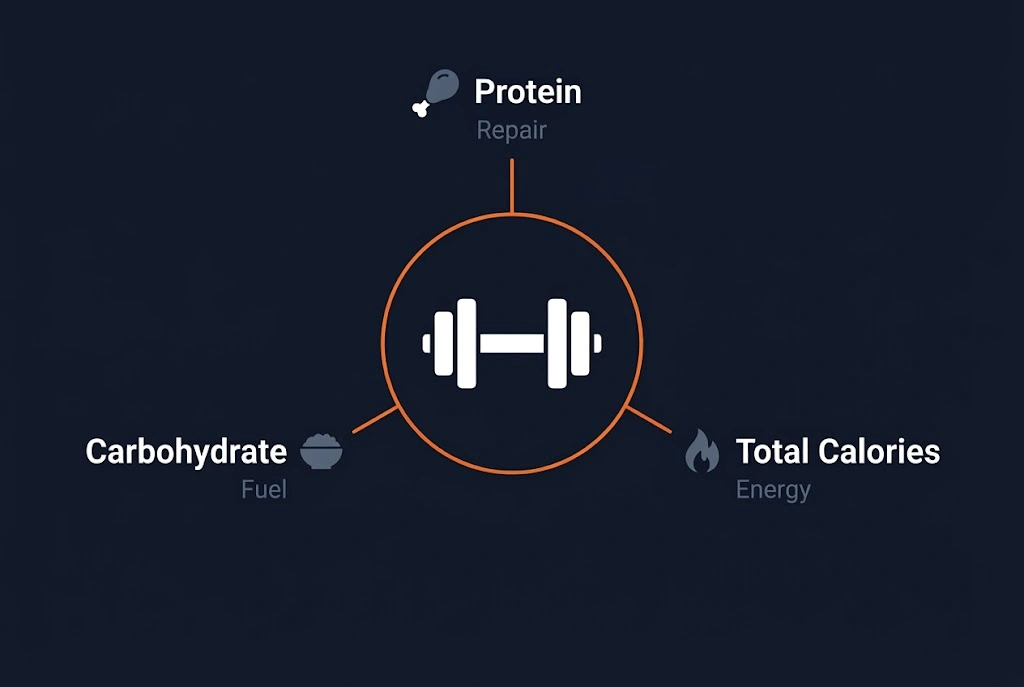
The Three Pillars: Protein, Fuel, and Total Calories
Three nutritional levers determine whether training produces adaptation. Protein supplies the amino acids that drive muscle protein synthesis and repair the damage training causes. Carbohydrate refills muscle glycogen, the primary fuel for high-intensity lifting. Total caloric intake is the energy budget that makes both possible: without enough of it, protein gets diverted to energy needs and recovery slows. This guide and its five cluster articles address all three.
Why Strength Athletes Have Unique Nutritional Needs
A strength athlete’s demands differ from a general gym-goer’s in specific ways. Maximal-effort training draws heavily on the ATP-phosphocreatine system, which has its own nutritional support in creatine. Progressive strength adaptation requires more protein than sedentary or moderately active people need. And competitive lifters must manage bodyweight for weigh-ins without sacrificing strength. General nutrition guidance addresses none of these directly.
Protein Requirements for Strength Athletes
No amount of training volume produces adaptation if the raw material for muscle repair isn’t there. That makes protein the foundational nutritional variable, the one to get right before worrying about anything else.
How Much Protein Do Strength Athletes Need?
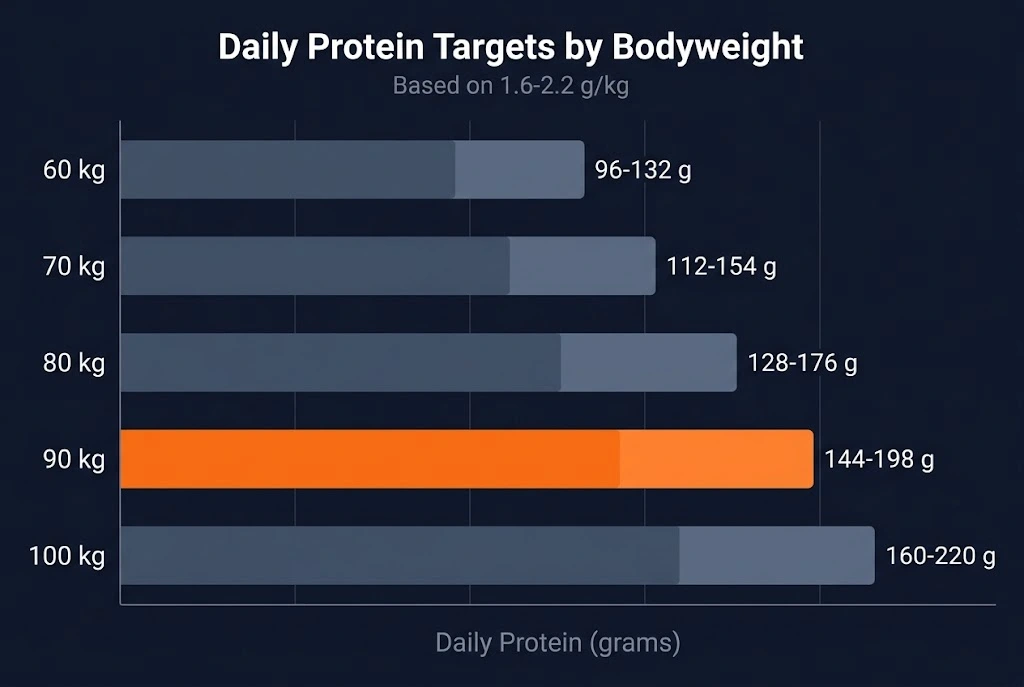
Most strength athletes need 1.6-2.2 grams of protein per kilogram of bodyweight per day. This range is supported by both ISSN and NSCA guidelines and represents the intake at which muscle protein synthesis is maximized for training individuals. For a 90 kg lifter, that works out to roughly 145-200 g of protein daily. Intakes above 2.2 g/kg show diminishing returns for most natural athletes: the extra protein isn’t harmful, but it doesn’t produce proportionally more adaptation, and the calories may be better allocated elsewhere.
Protein Timing and Distribution
How you distribute protein across the day affects the result as much as the daily total does. Spreading intake across 3-5 meals of 30-40 g each outperforms consuming the same total in one or two large sittings, because each meal independently triggers a muscle protein synthesis response. There’s a threshold involved: each serving needs roughly 2-3 g of leucine, the amino acid most responsible for triggering MPS, to maximally stimulate the response. This is why both meal size and protein quality matter alongside the total grams on paper.
Pre-Workout Nutrition for Maximum Strength Output
What pre-workout nutrition accomplishes is physiological: topping up muscle glycogen, ensuring amino acid availability, and keeping blood glucose stable through a demanding session. The stimulant energy rush people associate with it is beside the point. Get those three right and performance holds up across the whole workout.
What to Eat Before a Heavy Session
A mixed meal of carbohydrate and protein 2-3 hours before training is the standard recommendation for most strength athletes. Rice with chicken, or oats with a protein source, both fit the pattern. The carbohydrate component matters specifically because it tops up muscle glycogen, the primary fuel for the ATP-PCr and glycolytic energy systems that power heavy lifting. Arriving at a session with depleted glycogen means fatigue sets in earlier and top-set performance suffers, even if you feel fine at the start.
How Long Before Training Should You Eat?
Timing is functional, not arbitrary. Allow 2-3 hours for a full mixed meal to digest. If you train earlier and can’t fit that in, a smaller carbohydrate-focused snack 30-60 minutes before works. Training with a full stomach impairs performance and causes discomfort under heavy loads, which is the reason for the spacing. This is separate from pre-workout supplements: pre-workout nutrition is about fuel and digestion, not stimulants.
Creatine and 1RM Performance: What the Science Says
Creatine is the most extensively researched ergogenic aid in sports nutrition, and the most consistently effective one for maximal strength. Unlike most supplements marketed to lifters, the evidence here is not ambiguous.
How Creatine Affects Your 1RM
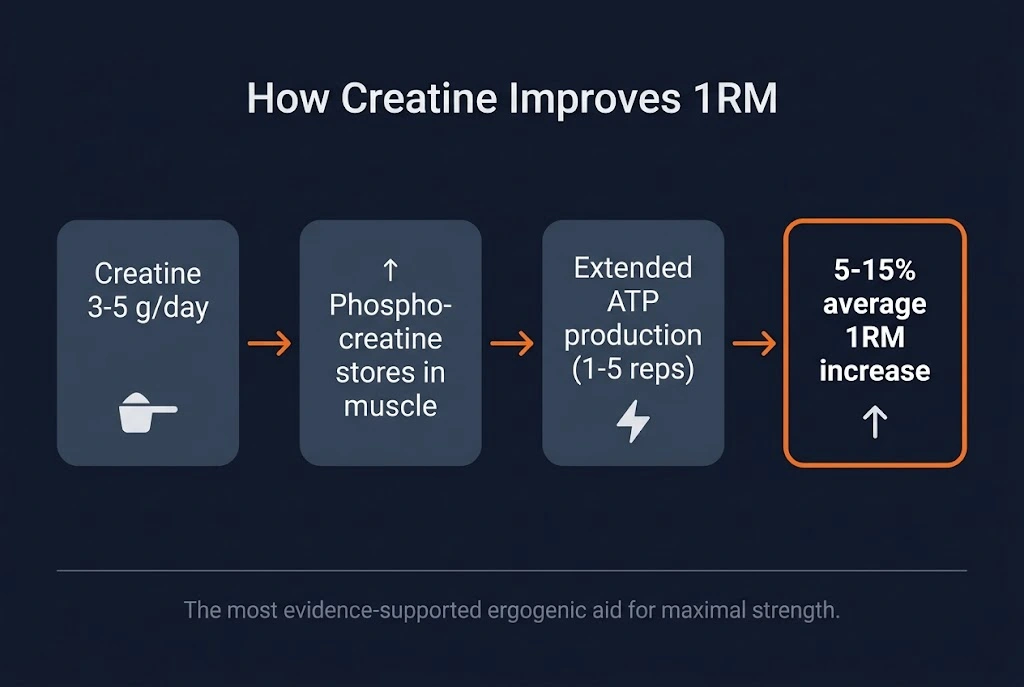
The mechanism is direct and worth understanding. Creatine supplementation increases phosphocreatine stores in muscle, which extends the duration of maximal ATP production during high-intensity efforts in the 1-5 rep range. More available phosphocreatine means more force output before the energy system fatigues. The measured outcome matches the mechanism: meta-analyses demonstrate average 1RM improvements of 5-15% in lifters supplementing with creatine versus placebo groups training identically. That’s a large effect for a single supplement, and it’s reproducible across studies.
How Much Creatine Should You Take?
The effective dose is 3-5 g per day of creatine monohydrate, taken consistently. No loading phase is required. A loading protocol (20 g per day for 5 days) only accelerates the initial muscle saturation and does not change the long-term result. Creatine monohydrate is the most researched form, and no other form (hydrochloride, ethyl ester, or buffered variants) has demonstrated superior efficacy in the literature despite frequently costing more.
Creatine’s benefit compounds with a structured Strength Training Programming approach: the supplement raises your ceiling, but progressive overload is what moves you toward it.
How to Eat for a Powerlifting Meet (Peak Week Nutrition)
Peak week nutrition is the specific challenge of maintaining strength output while managing bodyweight in the final 5-7 days before a competition. It’s where a lot of first-time competitors sabotage months of training with a bad final week.
Managing Bodyweight in the Final Week
The goal is arriving at the platform glycogen-replete, well-hydrated, and digesting normally. The common failure is severe caloric or carbohydrate restriction to make a lower weight class, which reliably suppresses strength output, often by more than the weight class advantage is worth. A lower-risk approach for small adjustments: reduce gut content in the final 1-2 days by cutting back on fibre and raw vegetables, which lowers scale weight without depleting the glycogen and hydration that strength depends on.
What to Eat on Meet Day
The meet-day principle is maintaining blood glucose and glycogen through the warm-up and the competition itself. Meets run for hours, attempts are separated by unpredictable intervals, and the food you bring should be easily digestible and familiar. This is not the day to try something new. The dedicated article covers specific food choices and timing across a full meet day.
Peak week nutrition is one part of a full-meet strategy. The Powerlifting & Competition guide covers the rest.
Bulking vs Cutting for Maximum Strength
Whether to eat in a surplus or a deficit is one of the most practically significant decisions a strength athlete makes, and it directly affects how fast strength progresses. The answer depends on where you are, not on a universal rule.
When to Prioritise a Caloric Surplus
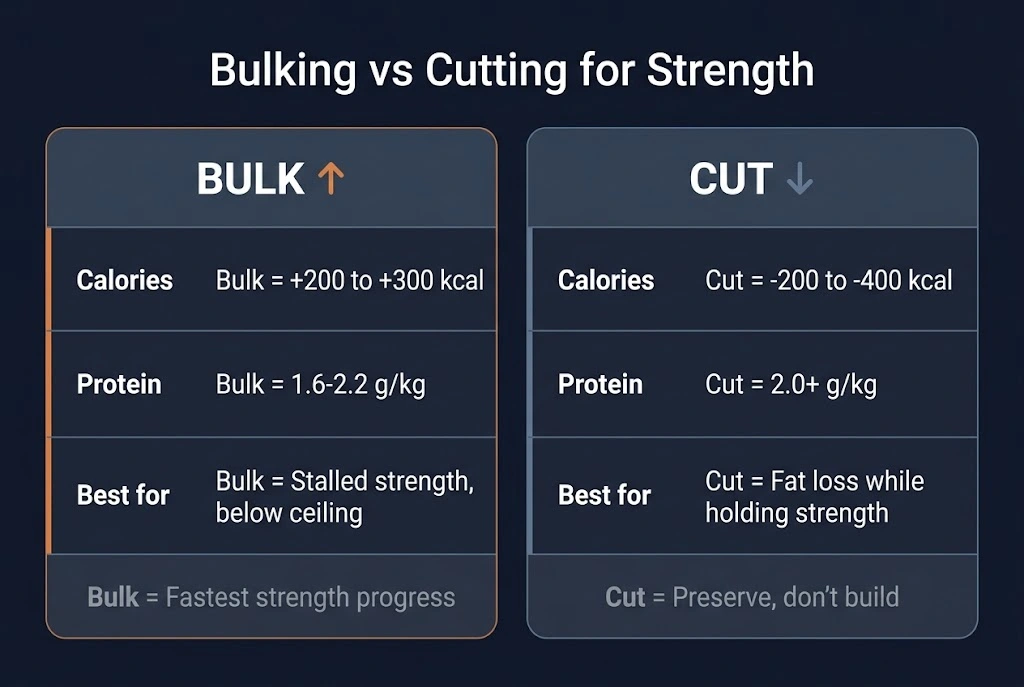
A controlled bulk, a surplus of 200-300 kcal above maintenance, supports muscle growth and faster strength progress without excessive fat gain. The lifters who benefit most are those at or below their natural strength ceiling for their bodyweight, and those whose strength has stalled despite consistent, well-structured training. The word that matters is controlled. Aggressive bulk phases (500+ kcal surpluses) accumulate fat without proportional strength benefit for most natural lifters, and the extra fat just has to be cut later.
How to Cut Without Losing Strength
A strength-preserving cut has three conditions: a modest deficit of 200-400 kcal, protein maintained at 2.0 g/kg bodyweight or higher, and training intensity preserved by reducing volume before cutting intensity. The primary risk is recovery impairment: caloric deficits slow tissue repair and increase injury susceptibility, which progressively limits training quality over weeks. Experienced, lean lifters carry more risk of strength regression during a cut than beginners or those with higher body fat, whose bodies have more stored energy to draw on.
A deficit impairs recovery directly, which is why cutting and recovery management are linked. The Recovery & Performance guide covers the full picture.
Frequently Asked Questions
Key Takeaways
Nutrition is not a marginal variable in strength development. Protein, total calories, and strategic supplementation are the raw materials progressive overload works with, and no training program overcomes a nutritional deficit indefinitely. Get protein to 1.6-2.2 g/kg, keep calories appropriate to your current goal, and add creatine as the one supplement with strong evidence behind it. The five articles in this cluster cover each dimension in depth.